The kitchen
Every fridge, every day, written down.
A kitchen this size has to keep a daily record of its temperatures, and produce it when an environmental health officer asks. Saltbox keeps that record on a phone.
The app is Probe. Its rules are a small Kotlin module with no Android in it at all — which is why the same code can run here, in your browser, and tell you exactly what it would tell the chef standing in front of the fridge.
Try it
Type a temperature. The verdict, the limit it quotes, and the instruction underneath are all produced by the app's own rules.
The same rules, on the phone
These are rendered from the real app — light and dark, and at twice the default text size, which is where an interface built without thinking about it usually falls apart.
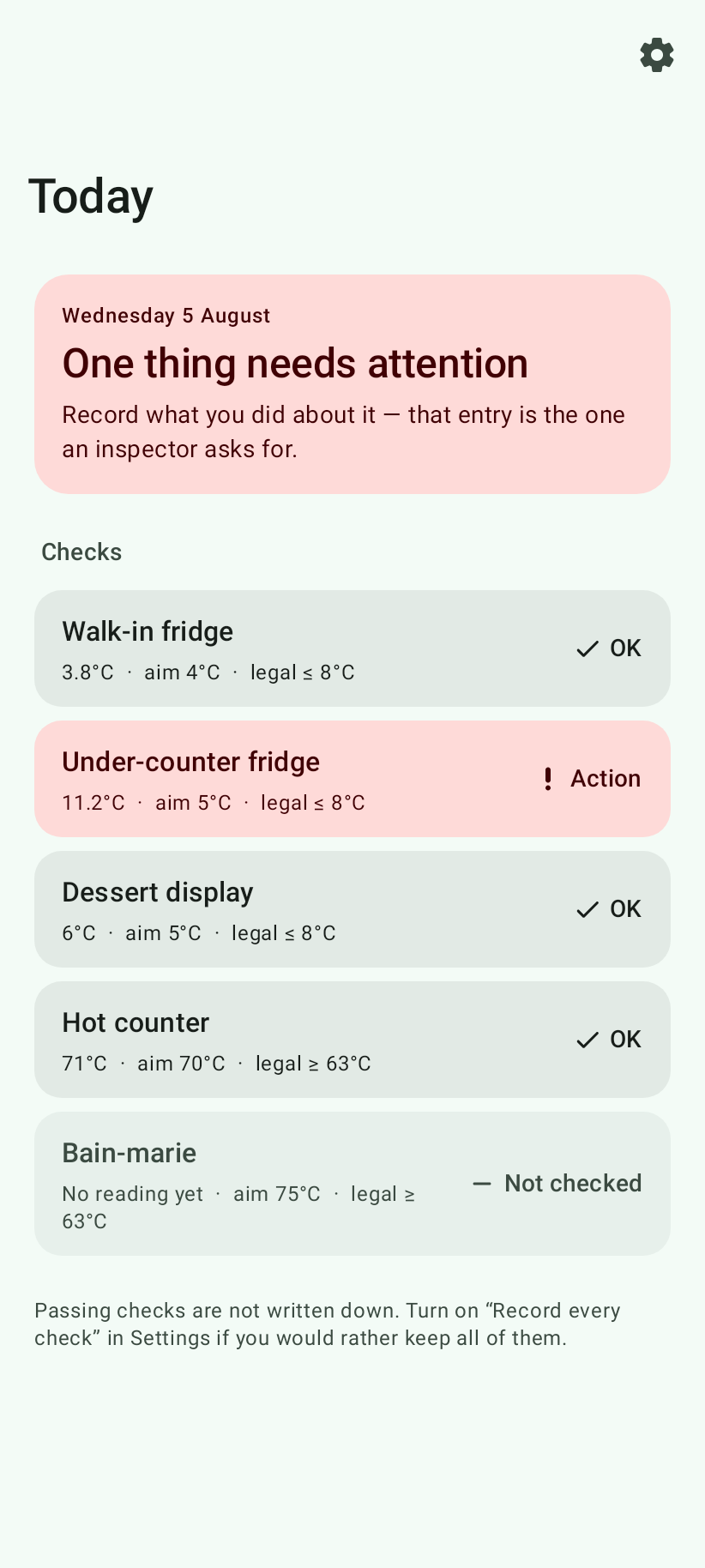
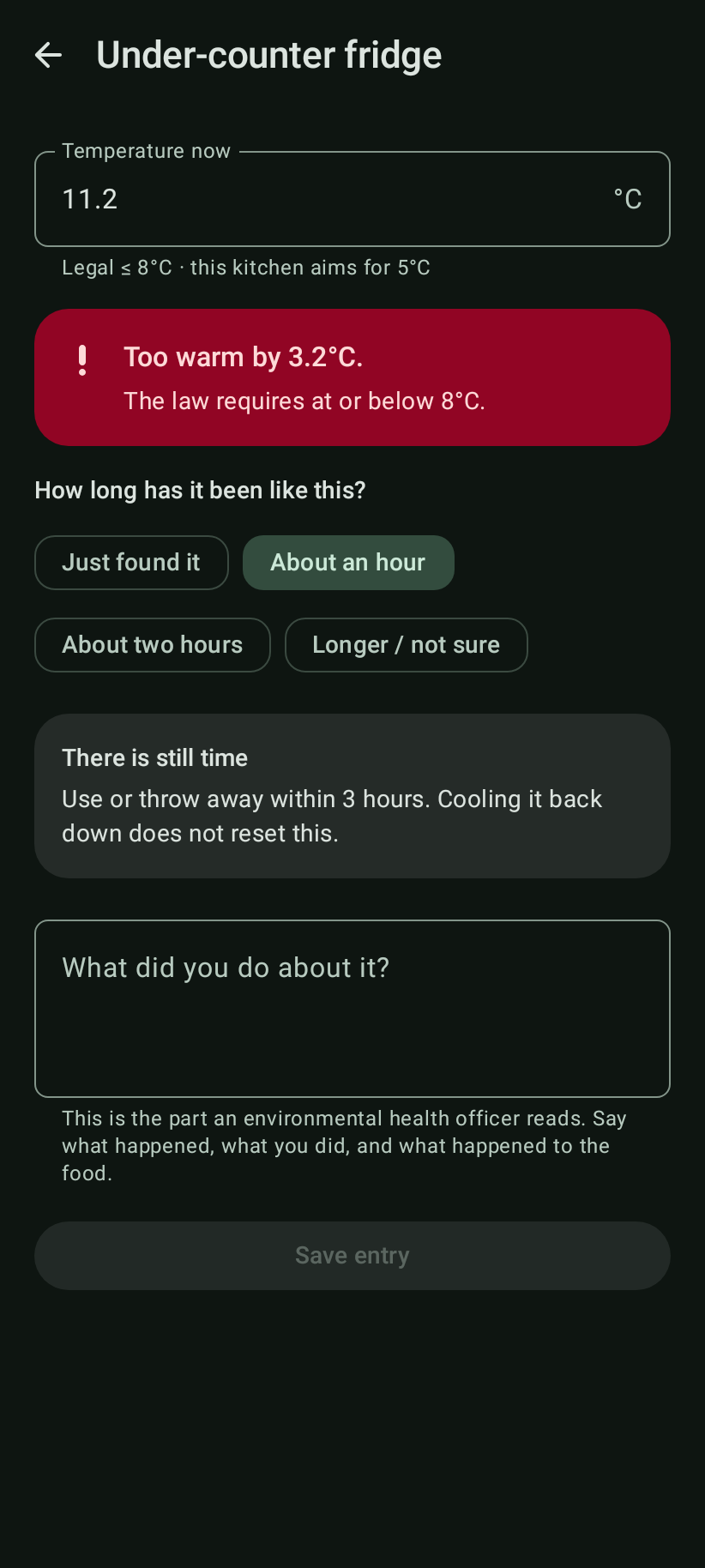
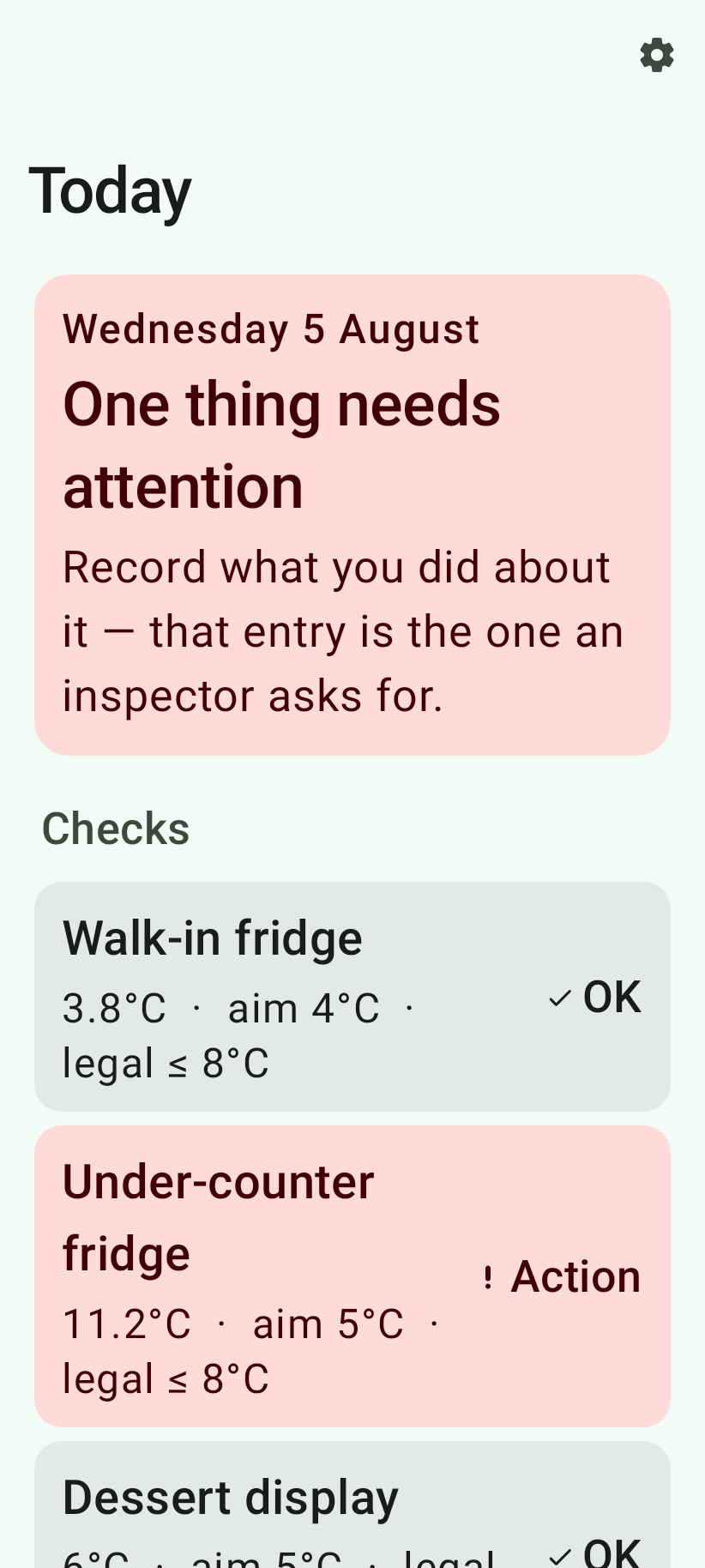
How this works
The rules live in one Kotlin module that imports nothing — no Android, no user interface, and no third-party libraries at all. The Android app depends on it. This page imports it compiled to JavaScript. The test suite runs the same file on two different runtimes and checks it answers identically, because 2.0 prints as"2.0" in one and "2" in the other, and an app and a website that quietly disagree about a temperature are worse than either one being wrong on its own.
The figures are law rather than preference: 8°C for chilled food, 63°C for hot holding, and single tolerance periods of four and two hours. They cover England, Wales and Northern Ireland. Scotland's rules differ and are deliberately not modelled — a wrong number would look exactly like an answer.
This is a demonstration, not a compliance product. It has not been reviewed by an environmental health officer, and no automated check makes a kitchen compliant with anything.